
THE GENDER, ETHNIC AND POWER DYNAMICS WITHIN THE COMMUNITY
The results of the ethnographic survey conducted in 2022 by IRD and ECC show that a majority of households are led by the exclusive judgement of a man, either the father or the husband (67%). A modest proportion of households share decisions between husband and wife or mother and father (27%).
“The wife has no right to decide by herself.”
“In our ethnic group, we consider that the husband is the head of the family, so he is the one who takes the decisions for the family.”
“The husband should take the decision because he is the one in charge of money.”
“The husbands take the decision in our village. Women can’t decide because they can’t drive. If they want to go out, their husbands need to take them. Moreover, if they go out by themselves, they would be afraid that their husband would be angry at hers.”
“For those who ask their husbands, it is because they are afraid their husbands will be angry and beat them.”
“When I am sick, I talk to my mother, then my mother talk to my father. If he says to go to the hospital, then I go. If he says to go see the traditional healer, then I go to see him.” (An adolescent girl).
THE HEALTH PRACTICES AND HEALTH SYSTEMS WITHIN THE COMMUNITY
« In my house we always consult the traditional healer, it has always been this way » (A mother).
« There are some beliefs that come from our parents, like diseases come from spirits of the well, spirits of our parents, of the forest, of the mountain or from someone who wants to hurt us. This is why we have Dr. Sayasath, the blow healer.” (A health staff).
« We are used to consulting the traditional blow healer. He treats us for 1 to 3 days and then, if not better, we go to the health facility. In case of a bad spell, for example if blood comes out of the mouth or nose, or if we lose weight, get moody, have stomachache all time, then we consult the traditional healer, and he cures us » (A mother).
STILL MANY WOMEN ARE DELIVERING ALONE IN THE FOREST
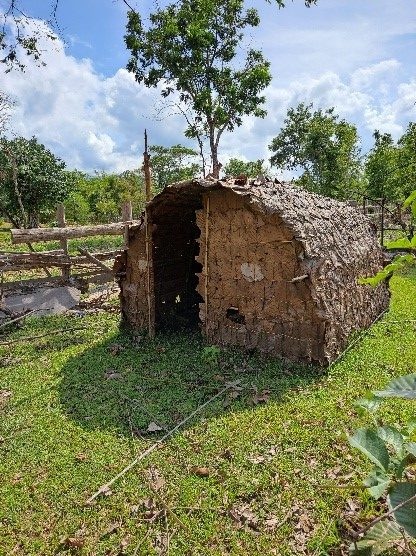
« During the birth of my last child, I was at home and I felt contractions. I went to the forest near the village to give birth. I cut the umbilical cord by myself, I attached it. Then, I came back home with the baby. « During the birth of my last child, I was at home and I felt contractions. I went to the forest near the village to give birth. I cut the umbilical cord by myself, I attached it. Then, I came back home with the baby. My husband boiled water for me and the baby to shower before I entered into the house. I stayed on the warm bed only one day” (A mother).
« I gave birth in the forest because my family respects tradition. If someone get sick or die in the village at the time of the birth, people will say it is our fault and we will have to pay a cow or a buffalo. Everyone is afraid to pay the fine, so we respect the tradition. But I must say that in the past there was no car and roads were bad, so it was easier to give birth in the forest than going to the hospital” (A mother).
“Today most women give birth at the health centre. Only a few of those who give birth easily, who don’t have time, or the road is too bad, continue to give birth in the forest or at home. In my opinion, women who give birth at home or in the forest are those who still follow the tradition. There are still some beliefs like if we give birth in a place there used to be someone else’s blood, it is taboo because the child could not be healthy” (Village midwife).
In 2023-2024, IRD/ECC research team collected several life histories about TB, malaria and MCH care from villagers. By telling their life story, some villagers contribute to helping other people to better understand TB, malaria, and MCH care, and the ways to protect themselves from diseases or prevent complications. Below are the life histories of a woman who gave birth alone in the forest and a man who had tuberculosis.
How did I give birth alone in the forest?

How did I cure from tuberculosis?

 HEALTH Project